
High Value Contents Claims Restoration Contractors
The high value contents claims restoration contractors handle require more than a replacement-cost number. They require a defensible record of the item, its condition, its location, the evidence captured before movement, and every decision that follows. This contractor reference explains how to preserve evidence, separate status from authorization, and prepare a clean handoff for the adjuster. It also links to the broader insurance claim documentation guide for contents restoration contractors.
Call iCat at 1-888-494-4228 to discuss a more controlled contents workflow.
What counts as high-value contents in an insurance claim?
High-value contents are items whose financial value, uniqueness, sensitivity, or dispute risk requires more evidence than a routine household line item. Common examples include jewelry, fine art, antiques, collectibles, designer goods, musical instruments, firearms, specialty electronics, and items with provenance or appraisal records.
The threshold is not only a dollar amount. A relatively ordinary item can become high risk when its make, model, condition, authenticity, or ownership history is difficult to establish. A one-of-a-kind item may have no simple replacement. An electronic device may require serial-number documentation and condition evidence. A collection may need item-level records even when the policyholder presents it as one group.
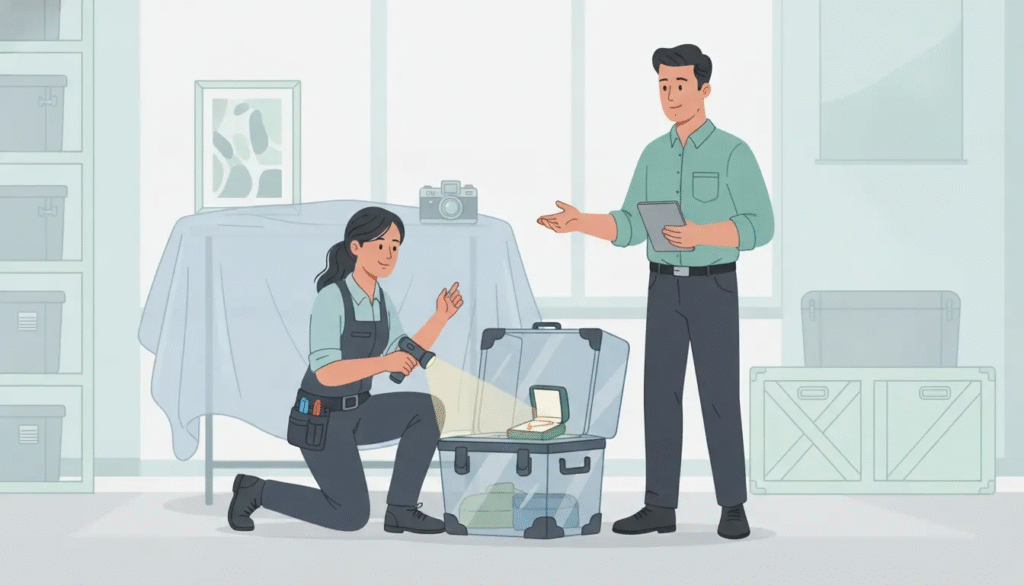
Flag the item when the team first encounters it. Do not hide the exception inside a general box or a broad description such as “electronics” or “artwork.” A high-value flag should trigger a defined review path, not an automatic salvage or non-salvage decision. The software can report condition and organize evidence, while trained staff and qualified specialists make the appropriate decisions.
How should contractors document jewelry, electronics, and art?
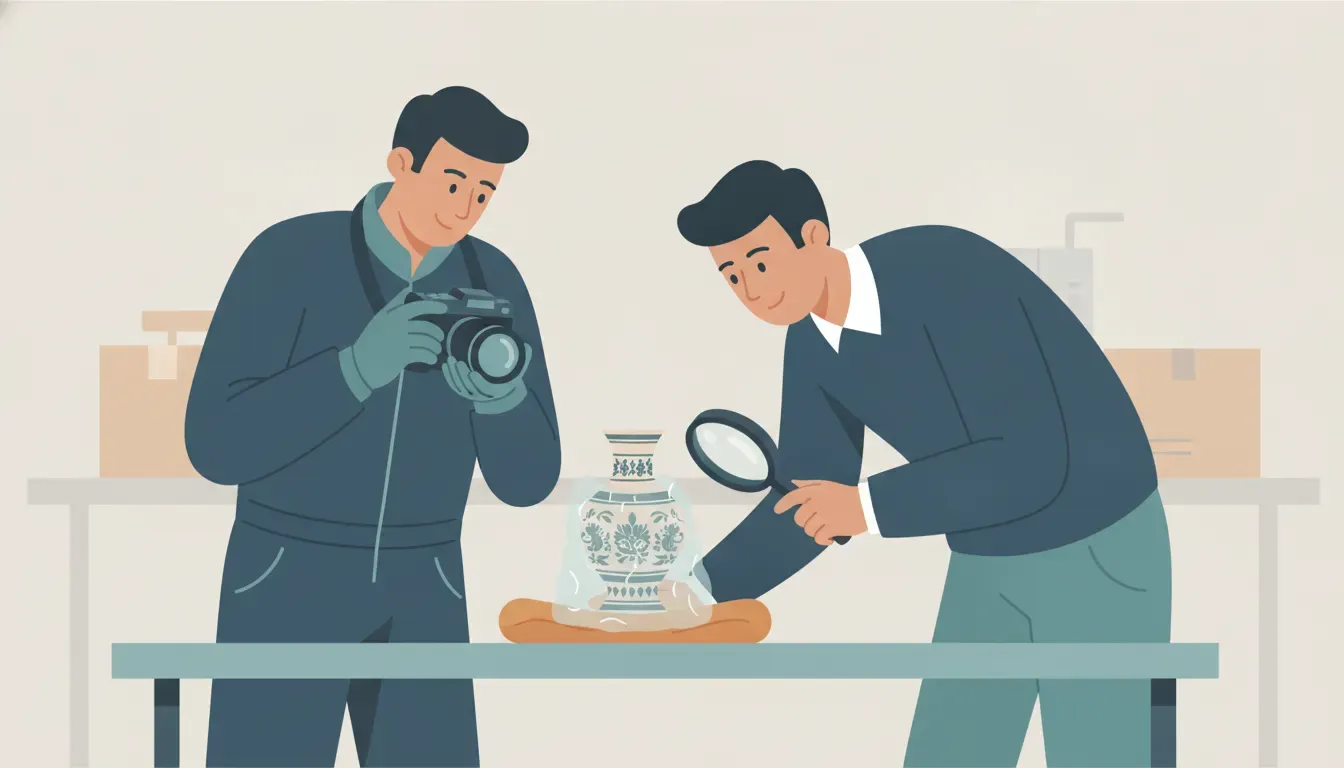
Contractors should document each high-value item before movement with wide and close photographs, a specific description, identifying marks, condition notes, location, status, and the supporting records available. The goal is to let another reviewer understand what the item was, where it was found, and what happened next without reconstructing the job from memory.
The National Association of Insurance Commissioners recommends taking an inventory and documenting valuable items such as antiques, electronics, jewelry, and collectibles. Its claim-filing guidance also recommends photos, videos, and receipts. Contractors build on that foundation with a controlled field process:
- Preserve the scene. Photograph the item in place before packing, cleaning, testing, or discarding anything. Capture the surrounding room when it helps establish location and context.
- Capture item-level evidence. Take clear views of the front, back, sides, damage, maker marks, serial numbers, labels, settings, signatures, and distinguishing features. Use a separate detail image when a wide photo cannot show the evidence.
- Write a specific description. Record the item type, brand, model, material, dimensions, quantity, color, identifying marks, and any information that distinguishes it from a generic substitute.
- Record condition without overreaching. Describe visible conditions and the evidence supporting them. Do not claim authenticity, hidden damage, market value, or restoration feasibility unless the responsible professional has established it.
- Connect the record to the next action. Link the item to its room, box, tag, photo set, storage location, status, exception note, and authorized movement. A record is only useful when the team can find the item again.
| Item type | Evidence to capture | Control point |
|---|---|---|
| Jewelry and watches | Metal or material, stones, markings, serial or model information, photos, receipts, appraisal, and grading records when available | Protect separately and flag authenticity or appraisal questions |
| Fine art and antiques | Artist or maker, title or description, dimensions, signature, provenance, frame, visible damage, and room context | Photograph before movement and route specialist questions to the appropriate reviewer |
| Electronics | Brand, model, serial number, accessories, screen or housing condition, power state, and visible damage | Separate item identity from testing results and record who authorized testing |
| Collectibles and instruments | Edition or model, manufacturer, distinguishing features, case, accessories, condition, and ownership records | Keep components together and document each handoff |
Use the same evidence standard for a high-value item that is later classified as salvageable, questionable, or non-salvageable. The status can change. The original evidence should remain intact.
What appraisal support is needed for high-value item claims?
Appraisal support for a high-value item claim means preserving available records, identifying gaps, and routing valuation or authenticity questions to the adjuster, policyholder, appraiser, conservator, or other qualified party. A restoration contractor should organize the evidence, not present an unqualified opinion as a formal appraisal.
Ask for the records that already exist, including purchase receipts, prior appraisals, certificates of authenticity, laboratory or grading reports, provenance documents, manufacturer records, photographs, and policy schedules when the customer or adjuster can provide them. Note whether each record was supplied, requested, unavailable, or pending. That status is more useful than a vague note that an appraisal is “needed.”
For jewelry, record the visible characteristics and preserve any gemological or appraisal documents. For art and antiques, record signatures, marks, dimensions, provenance, frame details, and visible condition without asserting authenticity. For electronics, capture model and serial information and document whether testing was authorized. For collectibles and instruments, preserve edition, model, accessories, and condition evidence.
Keep replacement valuation separate from the general inventory. A general contents inventory tracks what the item is, where it is, its photos, condition, status, movement, and return information. The additional replacement-valuation workflow applies after the item is determined to be non-salvage and may require detailed replacement or like-kind-and-quality information, age, depreciation, and applicable replacement-cost or actual-cash-value fields. See the related contents valuation guide for that separate branch.
See how iCat supports photo-based contents documentation and claim-ready workflows.
How do you separate status, authorization, and chain of custody?
Status describes the item’s current processing condition, authorization records who approved the next action, and chain of custody records where the item went and who received it. Keeping these three controls separate prevents a team from treating a tentative status as permission to clean, dispose of, test, transport, or replace an item.
Build the workflow around five checkpoints:
- Evidence preservation: Capture the item and its context before movement. Keep the original photos and notes connected to the item record.
- Status separation: Use distinct statuses for salvageable, questionable, non-salvageable, pending review, and other customer-approved exceptions. Do not use a status as a shorthand for authorization.
- Pending exceptions: Record missing appraisals, unclear ownership, disputed condition, incomplete policy information, or specialist review as open exceptions with an owner.
- Authorization: Document who approved testing, cleaning, storage, disposition, replacement, or another consequential action. If authorization is pending, hold the item in the appropriate controlled state.
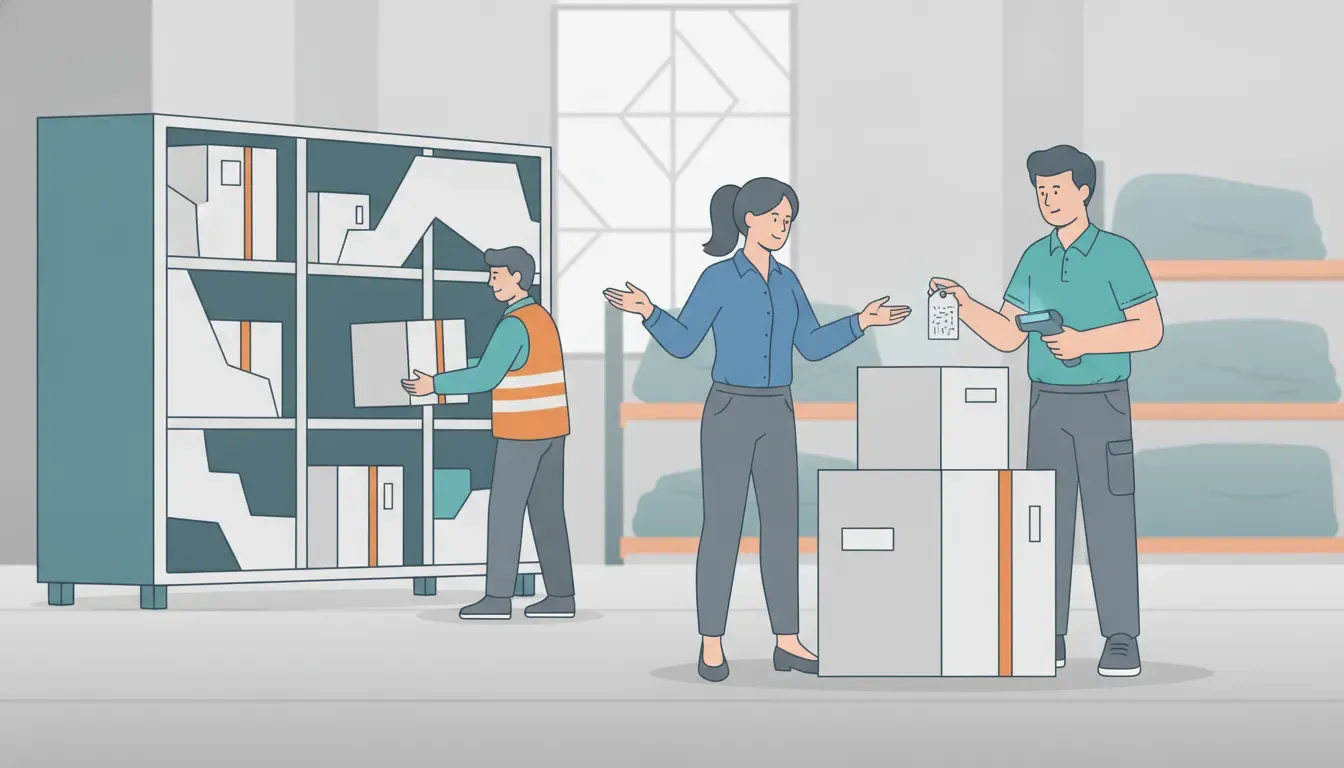
- Chain of custody: Record each transfer between the loss site, vehicle, facility, storage area, cleaning area, estimator, specialist, and return location. Reconcile the item at pack-back or final disposition.
FEMA’s claim documentation guidance recommends recording damaged or missing items, taking photographs or videos, and saving receipts for disaster expenses, repairs, and replacements. For a contractor, the operational extension is a traceable item history that shows when evidence was captured and when custody changed.
Use a simple exception log when the normal path breaks. The log should include the item identifier, open question, person responsible, date raised, next action, and resolution. This is especially important when the adjuster, policyholder, appraiser, and restoration team each hold part of the information.
Which documentation mistakes create avoidable disputes?
The most preventable disputes come from vague descriptions, missing before-condition evidence, mixed statuses, undocumented movement, unsupported valuation assumptions, and actions taken before authorization. Each mistake makes the next reviewer rely on memory instead of a connected record.
- Generic item names: “TV,” “painting,” or “ring” cannot reliably identify a high-value item.
- Photos captured too late: A post-movement photo may not establish the original location or condition.
- One status for everything: Combining pending review, questionable, and non-salvageable items hides the next decision.
- Unresolved exceptions: A missing appraisal or ownership question disappears when it is placed in free-text notes without an owner.
- Untracked handoffs: A box location does not prove who received an individual high-value item or when custody changed.
- Unsupported conclusions: A contractor record should not present a guess about authenticity, market value, or policy coverage as a verified fact.
Review high-value records before the crew leaves the site when possible. A short quality check can confirm that the item is identifiable, the photos are attached, the status is clear, the next action has an owner, and the custody record starts at the correct location.
How can valuation software support high-value contents workflows?
Valuation software supports high-value contents workflows by connecting photos, item descriptions, condition notes, locations, status, and valuation fields in one record that estimators can review. It reduces rekeying and makes missing information visible, but it does not replace professional judgment or make automatic salvageability decisions.
iCat helps contents teams capture inventories from photos, attach 360-degree photos and room-level notes, and maintain field documentation in a claim-ready workflow. For non-salvage contents, its valuation tools support item-specific like-kind-and-quality pricing, custom depreciation, sales tax by insured location, age and condition fields, and reports formatted for adjuster requirements. The team still reviews the information and decides how to handle each item.
Use the platform to improve record continuity, not to skip the exception process. A high-value item should remain connected to its original evidence, status history, pending questions, approvals, custody events, and final disposition. That continuity gives the estimator a stronger starting point and gives operations leaders a clearer view of work that is waiting on information. For the full claim-record framework, review the insurance claim documentation guide for contents restoration contractors alongside this high-value protocol.
For the broader workflow, review contents pack-out steps for contractors and the contents valuation guide. These resources cover the surrounding process without replacing the item-specific controls required for high-value contents.
Explore iCat’s contents restoration platform for inventory, valuation, and operations control.
Frequently Asked Questions
What items should a restoration contractor flag as high value?
Flag jewelry, fine art, antiques, collectibles, designer goods, musical instruments, firearms, specialty electronics, and any item with unusual dispute risk or supporting records. The decision should consider uniqueness, condition, authenticity, replacement difficulty, and the evidence needed for review, not only a preset dollar threshold.
Should contractors appraise high-value contents?
Contractors should document the item and organize available records, but they should not present an unqualified opinion as a formal appraisal. Route authenticity, market-value, and specialized condition questions to the appropriate adjuster, appraiser, conservator, or other qualified party.
What should be documented before moving a high-value item?
Capture the item’s location, wide and close photographs, identifying marks, serial or model information, visible condition, room context, ownership or supporting records when available, current status, and the person responsible for the next action. Start the custody record before the item leaves its original location.
How does software help with high-value contents claims?
Software connects photos, descriptions, locations, condition notes, statuses, exceptions, valuation fields, and custody events in one record. It can reduce duplicate entry and expose missing information. It should support trained staff, not make automatic salvageability, authenticity, or policy decisions.
