
iCat resource
What Do Restoration Companies Do? A Contractor's Guide

Restoration companies help property owners recover from damage caused by water, fire, smoke, storms, and other disasters. Their services may include emergency mitigation, structural repairs, and contents restoration , the specialized process of inventorying, cleaning, storing, and returning damaged personal belongings. While some companies provide all these services, others specialize in particular areas of restoration.
Talk to a contents restoration expert
What do restoration companies do across a property-loss job?
Restoration companies organize specialized work to address property damage and return affected areas or belongings to service. Their role is broader than performing a single repair: they assess the assignment, plan work, coordinate people and resources, document progress, and communicate about decisions and exceptions.
For a contractor, the work commonly falls into connected but distinct tracks:
Mitigation: Take authorized steps to limit continuing damage and make affected areas safe for planned work. The scope depends on the type of loss and the assignment. Contents operations: Identify affected belongings, document and move items when needed, manage cleaning or other processing, track storage, and coordinate return or disposition. Building repair: Complete the authorized repair or reconstruction scope, either with an in-house team or through separately coordinated trades. Project coordination: Keep schedules, access, customer communication, records, and decisions aligned across those workstreams.
Not every company performs every task. Some focus on mitigation or reconstruction. Others have a contents division, and some coordinate multiple specialties under one project plan. A clear scope helps the customer understand who is responsible for each task and helps the team avoid assuming that another party has handled it.
Contents restoration is often one of the most operationally demanding parts of a property-loss project. Beyond removing belongings from the affected area, contractors must inventory, pack, clean, store, track, and return contents while managing labor, documentation, and estimating. Learn more about contents restoration for contractors and how these workflows connect.The central point is that contents work is not just moving objects out of a room. It is a managed sequence with its own inventory, handling, production, storage, and return records.
How do mitigation, contents, and reconstruction fit together?
Mitigation, contents processing, and reconstruction are related parts of a property-restoration project, but each has a different purpose and record trail. Teams need to coordinate the timing without treating their scopes as interchangeable.
Consider a water loss affecting a living room and an adjacent storage area. The mitigation team may need access to affected building materials. The contents team may need to identify and move belongings that block the work or need separate attention. Building repairs may follow after the affected area is ready. The order and exact work depend on the site and authorized scope.
These services often overlap, making coordination important. Contents may need to be inventoried and removed before mitigation or structural repairs can proceed. Once repairs are complete and belongings have been cleaned or restored, the contents team coordinates their return. Clear communication and documentation help keep the different teams working together.
What does the contents restoration team handle?
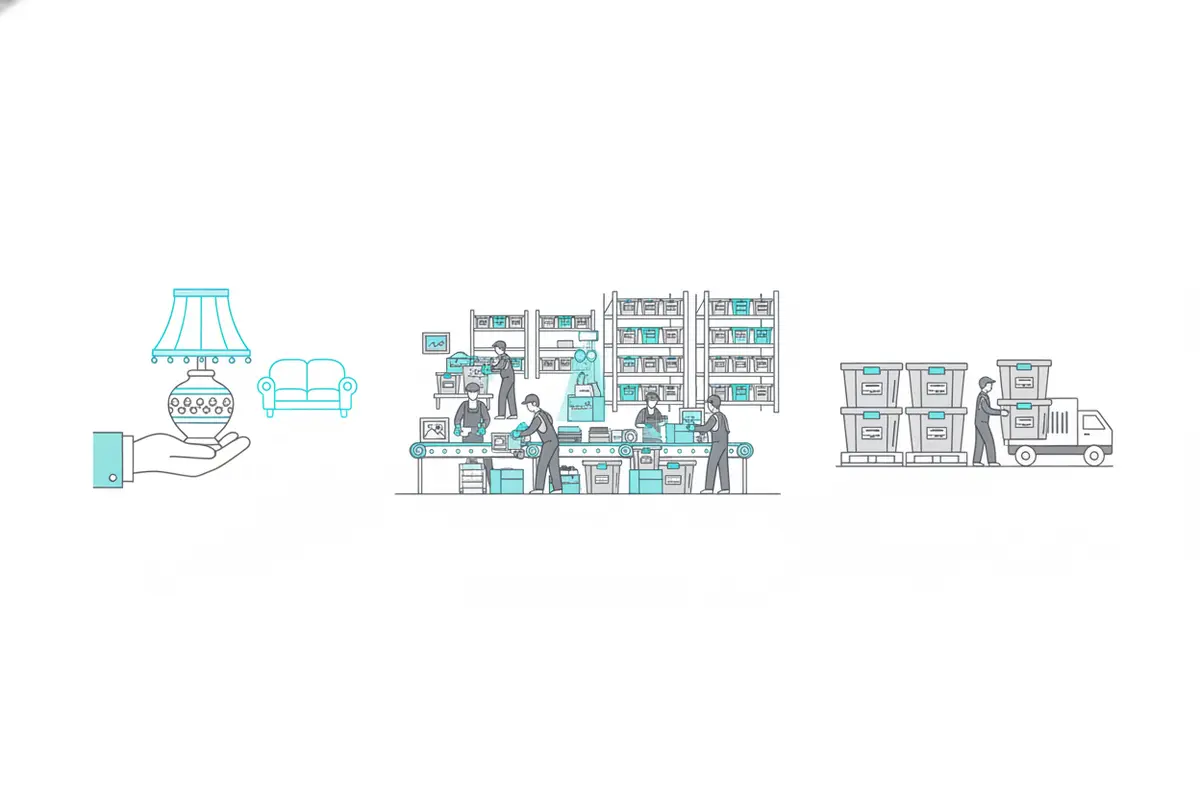
Contents restoration is a specialized operation focused on recovering, managing, and returning personal belongings affected by property damage. Depending on the loss, contractors may perform several connected services:
Assessment and inventory: Identify and photograph affected contents, recording their location and relevant details. AI-powered software can assist with identifying items and generating descriptions, significantly reducing manual data entry.
1\. Pack-out and transportation: Carefully pack, label, and transport belongings to a restoration facility when necessary.
2\. Cleaning and restoration: Assess and process salvageable contents using appropriate cleaning and restoration methods.
3\. Production management: Coordinate technicians, work assignments, cleaning progress, labor, and productivity.
4\. Storage and tracking: Organize contents within a warehouse and maintain visibility into their locations and status.
5\. Non-salvage documentation: Identify and document contents that cannot be restored, including replacement or like-kind-and-quality valuation where applicable.
6\. Estimating and billing: Document services, quantities, labor, storage, and other billable activities associated with the restoration work.
7\. Pack-back and return: Retrieve, organize, and return restored belongings once the property is ready.
These activities require more than a basic inventory list. A contents restoration operation must coordinate field technicians, production teams, warehouse personnel, estimators. And managers while keeping information connected throughout the job.A contents restoration team manages belongings affected by a property loss from identification and movement through processing. Storage, and return or other authorized disposition. The team needs enough item-level information to locate belongings, maintain accountability, and show what work remains.
These stages are explained in more detail in our contents job workflow from pack-out to completion and restoration field inventory best practices guides.
How Do Restoration Companies Document Contents?
Accurate documentation helps contractors track belongings, record completed services, support estimating, and communicate with customers and insurance representatives.
Contents records typically include item descriptions, photographs, room locations, relevant tracking information, production status, storage locations, and completed services.
Modern AI-powered inventory software can simplify documentation by allowing technicians to photograph contents rather than manually describing every item. Barcodes can be used when individual items or boxes require tracking, while other workflows, such as non-salvage inventory, may only require photographs and AI-assisted descriptions.
General contents inventory and non-salvage valuation serve different purposes. Replacement costs, age, depreciation, and like-kind-and-quality research are relevant to the non-salvage process when applicable, rather than being required for every item in a restoration inventory.
For a closer look at facility workflows, see our contents processing guide for restoration technicians.
How Does iCat Help Restoration Companies Manage Contents?
Managing a contents division involves coordinating inventory, technicians, production, storage, estimating, and customer documentation , often across multiple jobs simultaneously.
• iCat is an AI-powered contents restoration platform designed to bring these operations together.
• Instead of relying on disconnected spreadsheets, paper inventories, and separate tracking systems, contractors can use iCat to:
• Automate inventory documentation: Capture photos using an iPhone or iPad and let AI assist with item identification and descriptions.
• Work offline: Inventory contents without maintaining a constant internet connection and synchronize afterward.
• Track contents: Use barcodes and labels for items and boxes that require physical tracking through cleaning, storage, and return.
• Manage production: Organize cleaning workflows, monitor progress, and track work being performed.
• Manage storage: Track inventory locations and retrieve contents when needed.
• Simplify pack-back: Use digital picklists and connected inventory records to organize returning belongings.
• Support estimating and billing: Access inventory, production, labor, storage, and service information to help prepare estimates and document billable work.
• Manage non-salvage inventory: Document non-restorable contents and use AI-assisted LKQ replacement valuation where applicable.
• Improve operational visibility: Review job progress, production activity, and performance across the contents operation.
By connecting these activities within one platform, iCat helps restoration contractors reduce repetitive administrative work, improve productivity, and maintain better control over their contents division.
Discover How iCat Can Improve Your Contents Operation
Frequently asked questions
Do restoration companies handle both building repairs and contents?
Some companies coordinate both, while others focus on a narrower service scope. Confirm which work the contractor is responsible for, which tasks involve another provider, and what requires a separate authorization or contract.
What does a contents restoration contractor do?
A contents contractor documents and manages affected belongings through the assigned workflow. Depending on the scope, that can include inventory, pack-out, movement, facility processing, storage, return coordination, and a separate process for authorized non-salvage items.
Does every contents inventory need replacement values?
No. General inventory supports identification and workflow management. Replacement and depreciation details belong to a separate non-salvage valuation process when applicable, not automatically to every contents line.
How Does AI Help Restoration Companies?
AI-powered contents restoration software helps contractors reduce manual documentation, identify items from photographs, generate inventory descriptions, and assist with replacement valuation for non-salvage contents. By reducing repetitive data entry and connecting inventory, production, storage, and pack-back, contractors can improve efficiency and allow technicians to focus more time on productive restoration work.
Restoration companies play an essential role in helping property owners recover from unexpected damage. While mitigation and reconstruction address the building, contents restoration focuses on protecting, restoring, and returning the personal belongings inside.
For contractors managing a contents division, the right technology can make a significant difference. iCat combines AI-powered inventory, production management, storage tracking. Estimating support, and pack-back workflows into one connected platform , helping restoration businesses work more efficiently, improve profitability, and scale their contents operations.
For more detail on this separate workflow, see our non-salvage contents processing guide.