
iCat resource
Contents Restoration vs Structural Restoration: Job Guide

When contents crews and structural trades work on the same loss, delays rarely come from effort alone. They come from unclear handoffs, overlapping scopes, and records that do not show who performed which service. A practical operating plan keeps the property safe, protects the inventory, and gives estimators a usable record of the work completed.
Call 888-494-4228 to organize your contents restoration workflow.
Contents restoration vs structural restoration is not a choice between competing services. It is a division of work that requires separate scopes, coordinated sequencing, and clear documentation when both trades operate on one loss.
The right approach starts by defining what each workstream owns, then setting conditions for safe access and documented handoffs. From there, teams can coordinate field activity without blending contents records, structural scopes, or billing support.
What contents restoration vs structural restoration means on one loss
Contents restoration addresses the movable property affected by a loss, while structural restoration addresses the building and its fixed components. On a shared loss, the practical challenge is coordinating these separate workstreams without blending their records, responsibilities, or billing.
Contents work can include inventory capture, condition documentation, pack-out, transportation, cleaning, packaging, warehousing, and pack-back. Structural work concerns the physical property itself, such as affected rooms, assemblies, finishes, and building systems. The exact scope depends on the loss and the parties involved, so contractors should confirm responsibilities rather than rely on a universal sequence.
The distinction matters because contents records answer different operational questions than structural records. A contents inventory identifies what was handled, where it was found, how it moved, and what service it received. A structural scope identifies work performed on the building. Keeping those records distinct makes handoffs clearer and helps each team support the quantities and services within its own scope.
Where the workstreams meet
Overlap usually occurs at access, room readiness, protection of remaining property, and the transition back into the space. A structural team may need contents moved before work can proceed. The contents team may need a clear status from the structural team before returning items. Those dependencies should be recorded as handoff points, not treated as proof that one contractor manages the other trade's project.
For a broader explanation of the categories, see the broader contents and structural distinction. For contractor-specific context on the contents service line, use this contents restoration operations guide.
The narrower operating angle is simple: define each workstream, identify the dependency between them, and preserve separate records at every handoff. Contents restoration teams can then keep inventory and production documentation consistent while coordinating effectively with the structural team.
How should you sequence contents and structural work when crews overlap?
Sequence overlapping work by establishing the work areas and hazards first, then protecting contents, coordinating crews, and confirming the handoff before the next team starts. There is no universal order for every loss, but a documented pre-job sequence reduces avoidable interference between contents and structural activities.
- ### Identify the work areas and current contents status
Walk the affected areas with the relevant field leads. Mark where contents remain in place, where pack-out or manipulation is needed, and where structural access is required. Record room or location details, item or box identifiers, and any areas that cannot be entered yet. This creates a shared starting point without blending contents production records into the structural scope.
- ### Align hazards, access, and controls
Before crews begin, discuss the hazards each activity may create for other workers. Confirm access routes, restricted areas, equipment conflicts, required controls, and the person to contact when conditions change. OSHA identifies these as multiemployer worksites when employees from a host employer and contractors or subcontractors work together. Its guidance recommends that each employer consider how its work and safety activities may affect others at the site. OSHA communication guidance supports making this coordination explicit.
- ### Protect contents before structural activity starts
Separate, cover, relocate, or pack contents according to their condition and the access plan. Protect identified items from dust, moisture, vibration, debris, and unnecessary handling. If an item cannot be moved safely, document its location and the control needed before structural work proceeds. Keep the contents decision visible to both teams rather than relying on an informal verbal assumption.
- ### Coordinate crews around shared access
Set the working sequence for shared rooms, corridors, entrances, utilities, and staging areas. Confirm who is working, where, and when. OSHA states that safety is enhanced when employers establish mechanisms to coordinate efforts and communicate effectively. Use a brief site meeting, updated notes, or a shared handoff record so field teams receive the same information.
- ### Confirm the handoff before changing the work area
At each transition, verify that the planned contents activity is complete or clearly paused, the area is ready for the next crew, and open exceptions are recorded. Note remaining contents, access limitations, newly observed hazards, and the person responsible for the next decision. Reconfirm the sequence when site conditions change. This keeps contents inventory and production records distinct from structural scopes while giving both teams a reliable operational record.
Which scope belongs to each trade, and what must stay separate?
Contents work generally owns the inventory, handling, movement, cleaning, storage, and return of personal property. Structural work generally owns the building, assemblies, and construction-related repairs. The exact division depends on the contracts, site conditions, and companies involved, so do not assume one universal model for every contents restoration vs structural restoration job.
Start with a written scope map before crews overlap. Name who controls each workstream, who approves changes, and what information must be handed off. A contents contractor may coordinate access and timing with the structural team without managing structural project decisions. For practical context on the contents side, see this contractor contents restoration guide.
| Work area | Contents restoration responsibility | Structural restoration responsibility |
|---|---|---|
| Contents inventory and handling | Identify, photograph, pack, transport, clean, store, track, and return personal property as authorized. | Provide safe access and protect completed building work from unnecessary damage or disruption. |
| Structural work | Document property affected by access, demolition, moisture, dust, or other site conditions and report exceptions. | Manage building materials, demolition, drying, reconstruction, and structural repairs within its assigned scope. |
| Shared decisions | Coordinate pack-out timing, room access, item status, contents protection, and pack-back readiness. | Coordinate work sequencing, site controls, access restrictions, and readiness of repaired areas. |
| Records that stay separate | Maintain inventory, production, movement, storage, cleaning, packaging, and pack-back records. | Maintain structural scope, materials, labor, demolition, reconstruction, and building-condition records. |
Keep contents inventory and production records distinct from structural scopes and service billing. Shared decisions should be documented as coordination notes, not blended into either trade's production record. That separation gives field teams and estimators a clearer account of what was handled, what was repaired, and which workstream owns the next action.
What should be documented at every multi-trade handoff?
Document the work area, contents status, site conditions, responsibility, and next action at every handoff. A clear record prevents the contents team and structural team from making different assumptions about what is ready, restricted, damaged, or still pending.
Use the same checklist at removal, cleaning, storage, reconstruction access, and pack-back. Record the exact location, room, zone, box, or item group. State whether the area or contents are ready, inaccessible, removed, awaiting approval, under treatment, or returned. Add timestamped photos that show the condition being transferred, not just a general room view.
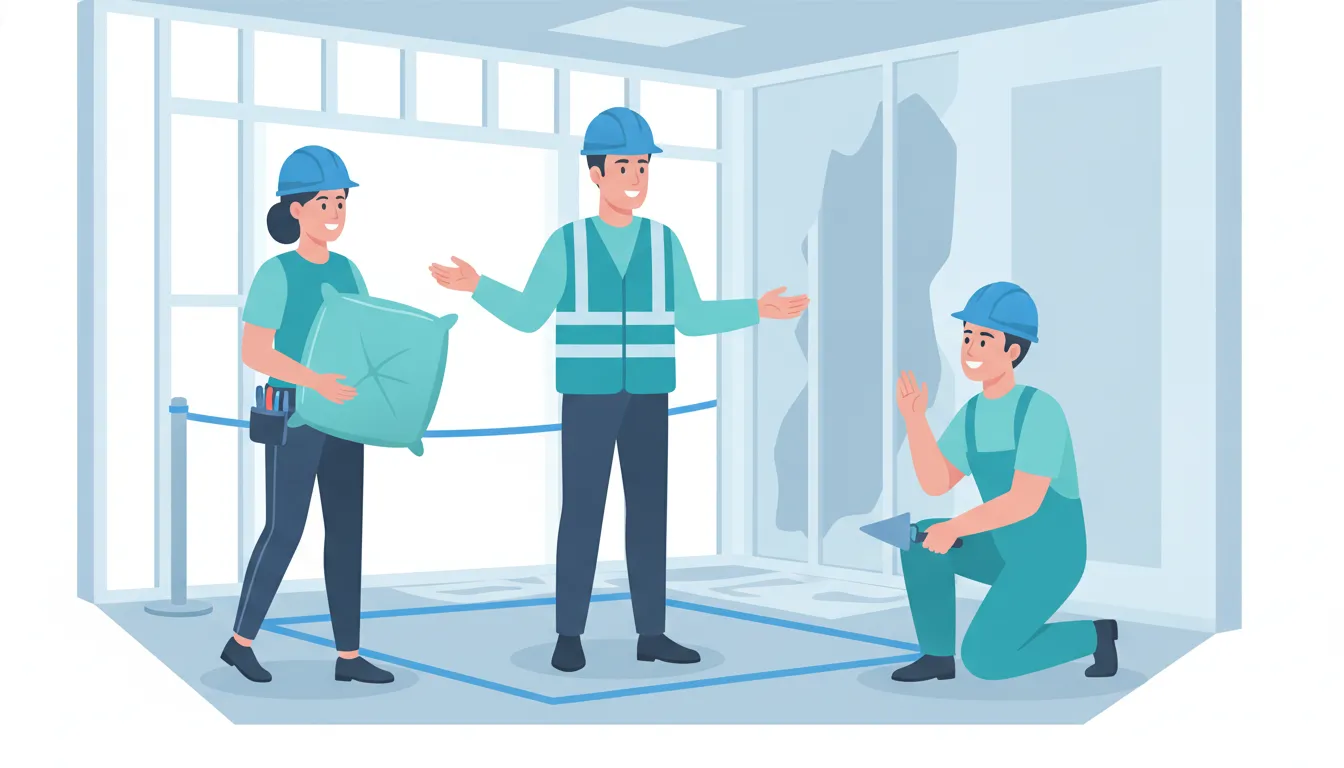
Location: Identify the room, area, container, or item reference. Status: State what has been completed, what remains, and whether contents are present, removed, cleaned, stored, or ready for return. Photos: Capture condition, access points, protection, work boundaries, and any visible change. Access: Record keys, escorts, restricted areas, shutoffs, scheduling limits, and who can authorize entry. Hazards: Note known or newly observed hazards, controls in place, and required protective measures. Owner and next action: Name the responsible trade or person, the action due, and the expected timing. Exceptions:* Record missing items, disputed scope, blocked access, changed conditions, damage discovered during work, and decisions still pending.
Hazard notes should be updated rather than copied forward. OSHA describes hazard identification and assessment as an ongoing process and recommends initial and periodic inspections for new or recurring hazards. See the OSHA hazard-identification guidance. Keep contents inventory and production records distinct from structural scopes and service billing, while linking each handoff to the relevant job record.
How should multi-trade restoration billing be separated?
Separate multi-trade billing by keeping contents inventory and production records distinct from structural scopes and service billing. Each workstream should document its own quantities, labor, materials, approvals, and completed services before the estimator combines the job-level picture.
For contents work, maintain a record of what was handled and why. That may include item or box identification, room or location, photographs, condition information, movement, storage, cleaning, packaging, pack-back, and other contents services. These records support estimating by showing the work performed. They should not be treated as a structural scope or as a substitute for the structural contractor's measurements and service documentation.
Structural work should remain in its own scope. Capture the affected assemblies, demolition or repair activities, equipment, labor, and other services according to the structural team's process. Avoid blending structural quantities into a contents production record simply because both trades worked in the same room. A clean separation makes exceptions easier to review and reduces the risk of charging one workstream's activity to another.
Operationally, use a handoff that identifies the job, work area, date, responsible team, completed services, pending items, and supporting evidence. The contents estimator can then reconcile inventory and production records with the applicable contents services, while the structural estimator works from the structural scope. The two records can reference the same loss without becoming one undifferentiated bill.
iCat's cloud portal supports managers and estimators with estimating, reporting, and operational oversight. The knowledge base also describes a beta pack-out material audit trail that shows how and where packing materials were used, with the intent of giving estimators billing backup. Treat that capability as documentation support, not an automatic billing decision or a structural-work record. Learn more about contents restoration management software and how it can organize the contents side of a multi-trade workflow.
How do you manage exceptions, delays, and changing site conditions?
Manage exceptions with a documented pause, hazard reassessment, revised sequence, and clear handoff. Do not treat a changing site condition as an informal field adjustment that disappears from the job record.
When access is delayed, a hazard appears, or another trade changes the planned sequence, pause and reassess before work continues. The contents lead should record what changed, where it occurred, who was affected, and which work is paused. Separate the immediate safety decision from the later scope or scheduling decision. This keeps contents inventory and production records distinct from structural-restoration scopes and service billing.
Use a four-part exception protocol
- Stop and assess. Recheck the area before crews continue. OSHA describes hazard identification and assessment as an ongoing process, not a one-time pre-job exercise. Its guidance also calls for considering emergency and nonroutine situations, which is relevant when site conditions change unexpectedly. Review OSHA hazard-identification guidance for the underlying framework.
- Control the immediate risk. Identify an interim control, such as restricting access, changing the work area, isolating affected contents, or waiting for the responsible trade to address the condition. Prioritize the response by the potential severity and likelihood of an incident, rather than by convenience.
- Record the exception. Capture photos, location, time, affected rooms or items, the observed condition, the action taken, and the person who authorized the revised plan. Note whether the change affects pack-out, cleaning, storage, pack-back, or only the structural sequence.
- Reconfirm the handoff. Update the next crew and the site contact before work resumes. Identify the new entry condition, remaining restrictions, and next decision point. If the exception changes contents handling, update the contents record without rewriting the structural scope.
This protocol gives project managers a defensible operational history without inventing a universal sequencing or billing rule. The goal is controlled coordination: reassess, protect the crew and contents, document the change, and resume only when the revised handoff is understood.
A practical multi-trade checklist for contents restoration contractors
A reliable multi-trade checklist keeps contents work, structural work, safety coordination, and billing records separate while making each handoff visible. The goal is not to make one contractor responsible for every trade. It is to make ownership, timing, and documentation clear before crews begin.
Before work starts
Confirm the scope owner for contents inventory, pack-out, cleaning, storage, pack-back, structural mitigation, demolition, and reconstruction. Identify access limits, active hazards, affected rooms, utilities, environmental concerns, and areas that must remain undisturbed. Agree on the communication path for schedule changes, newly discovered damage, incidents, and conditions that could affect another crew. Set the handoff points. Define when contents can be moved, when structural work can begin, and what condition must be documented before the next trade enters.
During field operations
Capture item-level contents records, locations, photos, movement, and status as the contents team works. Keep those records distinct from structural scope notes. Reassess hazards when conditions change. OSHA describes hazard identification as an ongoing process, with initial and periodic inspections used to identify new or recurring hazards: OSHA hazard-identification guidance. * Record exceptions instead of relying on verbal updates. Note blocked access, delayed drying, unplanned handling, missing approvals, and items that remain pending.
Before closing the job
Verify that contents inventory, warehouse activity, cleaning and packaging records, pack-back details, and structural documentation each support the work performed by that trade. Structured contents records help field teams and estimators maintain operational continuity. A contents restoration management software system can support inventory capture, documentation, warehousing, cleaning, packaging, and pack-back without claiming ownership of structural project management.
Use this contents restoration management software resource to evaluate whether your current records give the next person enough information to act without reconstructing the job from memory.
Call 888-494-4228 or learn how iCat supports contents restoration operations
Frequently Asked Questions
What is the difference between restoration and construction?
Restoration responds to damage and aims to stabilize, clean, document, and return affected property to service. Construction generally builds, repairs, or improves structural elements. On one loss, both may be present, but each trade should keep its scope, records, and billing support clear.
How should contents and structural crews sequence their work?
Start with a joint site review, identify hazards and access limits, then agree on the next safe handoff before work begins. The right sequence depends on the loss, building conditions, and trade scopes. OSHA recommends coordination and effective communication when multiple employers work at one site: OSHA coordination guidance.
How do you separate contents work from structural work?
Contents work covers activities such as inventory, pack-out, cleaning, storage, documentation, and pack-back. Structural work covers the building scope assigned to that trade. Keep contents inventory and production records separate from structural scopes and service billing, while documenting dependencies between them.
What should be documented at a multi-trade handoff?
Record the area or items involved, work completed, condition observed, photos, quantities, access restrictions, hazards, outstanding exceptions, and the person accepting the handoff. Update the record when conditions change. Structured contents documentation helps field teams and estimators support operational decisions without implying that contents software manages the structural scope.
Ready to organize overlapping restoration work?
Clear contents workflows help crews coordinate handoffs, protect scope boundaries. And keep documentation usable from pack-out through pack-back. iCat can help you organize contents restoration workflows and records when contents and structural teams share the same loss.